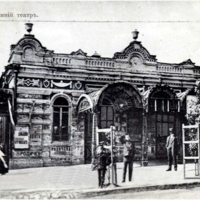
A photograph of the Winter Theater founded in the late nineteenth century by Vasyl′ Leontiǐovych Shapovalov. It was later replaced by the Donetsk Academic Regional Drama Theater in 1960.
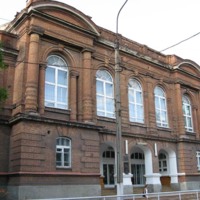
In 1941, the building housed a military hospital. While retreating from the city, the fascists burned the building of the former male gymnasium along with other houses. All that remained of it - burnt brick walls - was transferred to the industrial technical school. Reconstruction work was completed in 1952.
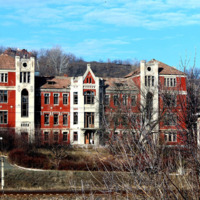
This hospital was built at the soda factory and located in the "Belgian heritage," the conventional name of a residential quarter in Lysychansk, which consisted of residential and public buildings erected at the end of the 19th - beginning of the 20th century for the servants and workers.
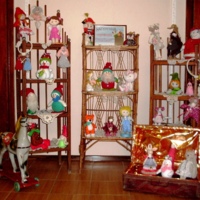
The exhibition features felt toys made by the artisan Olena Leonidivna Tomozova over the course of several years. The toys were inspired by fairy tales and poems from her childhood.
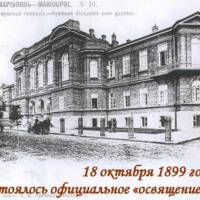
Announcement of the opening of the new gymnasium at the Gymnasium Alexandrinum (now VSP "Mariupol Vocational College of State Educational Institution "PDTU"), October 18, 1899, Mariupol.
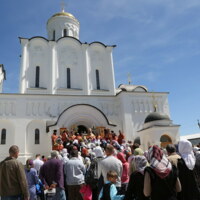
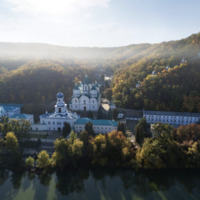
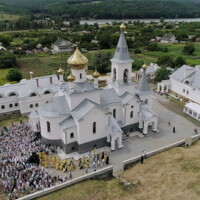
St. George's Skete of Svyatogirsk Holy Dormition Lavra of Donetsk Diocese of Ukrainian Orthodox Church was built in 1862. It is a wooden structure. In 1867 the building housed a public school for forty boys, and was eventually turned into a parochial school. A hermitage church dedicated to the martyr St George the Victory-Bearer was recently built on the site, based on the original model of the Church of the Intercession of the Mother of God on the Nerl.